
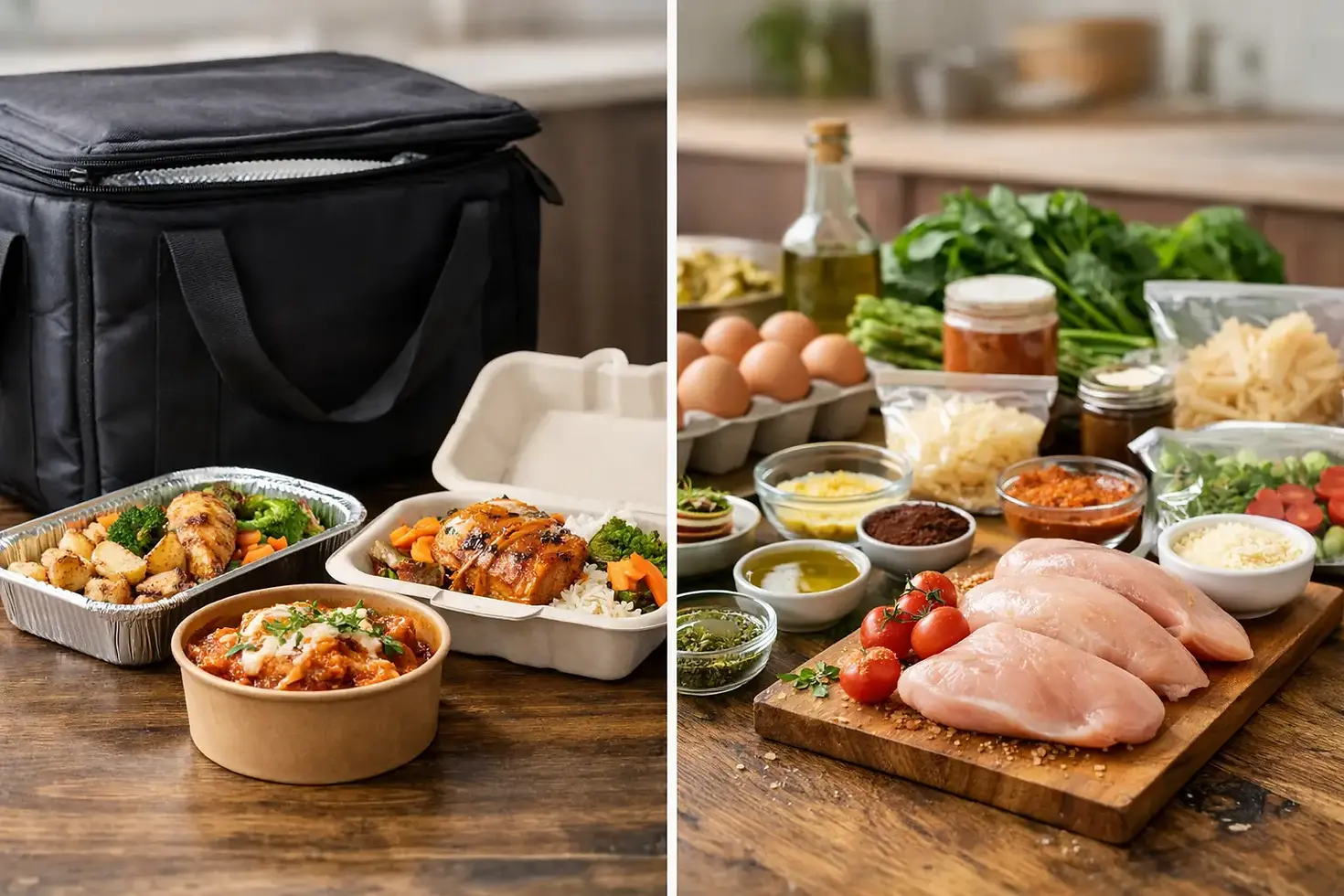
Prepared Meals vs Meal Kits: Which Fits?
Some weeknights, the question is not what sounds good for dinner. It is whether you have 45 minutes, a clean cutting board, and enough energy to deal with one more decision. That is where prepared meals vs meal kits becomes a real-life choice, not just a food trend.
For busy households, both options can be better than takeout or a last-minute grocery run. But they solve different problems. Meal kits help with planning by sending ingredients and recipes. Prepared meals remove the planning and the cooking. If your goal is simply to get a wholesome dinner on the table with less stress, that difference matters more than any marketing language.
Prepared meals vs meal kits: the core difference
The simplest way to think about it is this: meal kits still ask you to cook, while prepared meals ask very little of you beyond heating and serving.
A meal kit usually arrives with pre-portioned ingredients and a recipe card. Some chopping may be done for you, but not all of it. You still need to follow steps, use pans, monitor the stove, and clean up afterward. For people who like cooking but want help with planning and shopping, that can be a good fit.
Prepared meals are already made. In the best version of this model, the food is cooked fresh by real chefs using good ingredients, then delivered ready for your fridge. Dinner becomes a matter of warming it up and sitting down together. That makes prepared meals especially appealing for parents, working professionals, older adults, and anyone recovering from an injury or simply stretched thin.
This is why the choice is not really about which option is better in the abstract. It is about what kind of help you actually need.
When meal kits make sense
Meal kits can work well if cooking itself is not the problem. Maybe you enjoy being in the kitchen but dislike planning meals or shopping after work. Maybe you want to try new dishes without buying a whole jar of one spice you will never use again. In those cases, meal kits can feel useful and even fun.
They also give you more direct control over the final dish. You can add extra garlic, cook the vegetables a little longer, or adjust seasoning to your taste. For some households, that flexibility is part of the appeal.
Still, there is a gap between the promise and the reality. A meal kit may save a grocery trip, but it does not save your evening in the same way a fully prepared dinner does. You are still on the hook for prep, timing, active cooking, and cleanup. If your kids are hungry now, or your workday ran late, that can be the difference between a helpful service and one more task.
Meal kits also tend to work best for people who are comfortable in the kitchen already. Even simple recipe cards assume you can multitask, adjust heat, and recover if something cooks faster than expected. That may be fine on a calm Sunday. It is less ideal on a Wednesday when everyone is tired.
When prepared meals are the better fit
Prepared meals shine when your biggest pain point is not inspiration. It is bandwidth.
If you are juggling work, school pickup, sports schedules, appointments, caregiving, or just the steady rhythm of family life, fully prepared meals can remove a surprising amount of mental load. You do not need to choose recipes, shop for ingredients, chop vegetables, or wash a sink full of pans. You simply have dinner handled.
That ease is not just about convenience. It can also support better eating habits. When a nourishing meal is already there, you are less likely to fall back on fast food, snack plates, or the familiar but exhausting question of whether cereal counts as dinner.
Prepared meals also tend to be a strong fit for households with mixed needs. Maybe one person wants something protein-forward, another needs gluten-free options, and everyone wants food that tastes like a real meal rather than diet food. A thoughtfully made prepared-meal service can meet those needs without turning dinnertime into a custom cooking project.
For many local families, that is the real value. It is not luxury. It is relief.
The real comparison: time, cost, and energy
People often compare prepared meals and meal kits only on sticker price, but that leaves out the bigger picture.
Meal kits can look less expensive at first glance. But you still spend time cooking, and time has value, especially on weeknights. There is also the hidden cost of ingredients you may accidentally overcook, recipes that take longer than promised, and the temptation to order takeout when the meal kit feels like too much effort after all.
Prepared meals may cost more per meal on paper, but they often deliver more complete convenience. There is less wasted food, less cleanup, and less chance that dinner gets abandoned halfway through because life happened. For households trying to simplify, that trade can be worth it.
Energy matters too. Not every dinner decision should be framed as a test of discipline. Sometimes the smartest choice is the one that keeps the evening calm. If a prepared meal means more time helping with homework, eating together, or simply breathing for a minute, that is part of the value.
Quality depends on who is making the food
This is where broad category comparisons only go so far. Not all prepared meals are equal, and not all meal kits are equal.
A mass-market prepared meal can feel generic, heavily processed, or portioned for someone with a very different appetite than your household. On the other hand, a local prepared-meal service can feel much closer to the food you would make at home if you had the time, especially when the meals are cooked fresh by certified chefs and built around seasonal ingredients.
The same goes for meal kits. Some offer solid ingredients and clear recipes. Others can leave you with too much packaging, too little flavor, or meals that look easier on the card than they are in real life.
That is why it helps to look beyond the category and ask better questions. Who is sourcing the ingredients? Is the food made with care? Are the meals family-friendly? Is there flexibility if you only need help on certain nights? Can the service handle food sensitivities without making things complicated?
For many Peninsula households, local matters here. A service rooted in the community often has a better understanding of what families actually want to eat and how they actually live.
What families usually care about most
Most people are not choosing between prepared meals and meal kits based on culinary ambition. They are choosing based on what makes the week work.
If your household enjoys cooking together and has the time to do it, a meal kit may fit well a couple of nights a week. It can create a sense of structure and help break out of a dinner rut.
But if your evenings already feel full, prepared meals usually line up better with what you are trying to protect: time, ease, and a little less pressure. That is especially true for families with young kids, couples managing busy work schedules, retired adults who want good food without the labor, or anyone who needs dependable meals during a hard season.
That is one reason services like San Mateo Supper Club resonate with local households. The value is not just that dinner is done. It is that the meals are fresh, family-style, and made by local chefs with the kind of ingredients you would want in your own kitchen - wholesome produce, high-quality proteins, and oils and fats chosen with care. That makes the convenience feel trustworthy, not transactional.
So which one should you choose?
If you still like to cook and mainly want help with planning and shopping, meal kits can be a solid option. They offer structure without fully taking over the meal.
If you want dinner handled from start to finish, prepared meals are usually the better answer. They give you the biggest return on your time and attention, and for many households, that is the resource in shortest supply.
There is no rule that says one choice has to fit every season of life. A household might enjoy meal kits during a quieter stretch and lean on prepared meals during back-to-school season, a busy work cycle, or anytime life gets crowded. What matters is choosing the kind of support that matches your real evenings, not your idealized ones.
The best dinner solution is the one that leaves your household feeling fed, cared for, and a little more at ease when the day is done.


Comments